
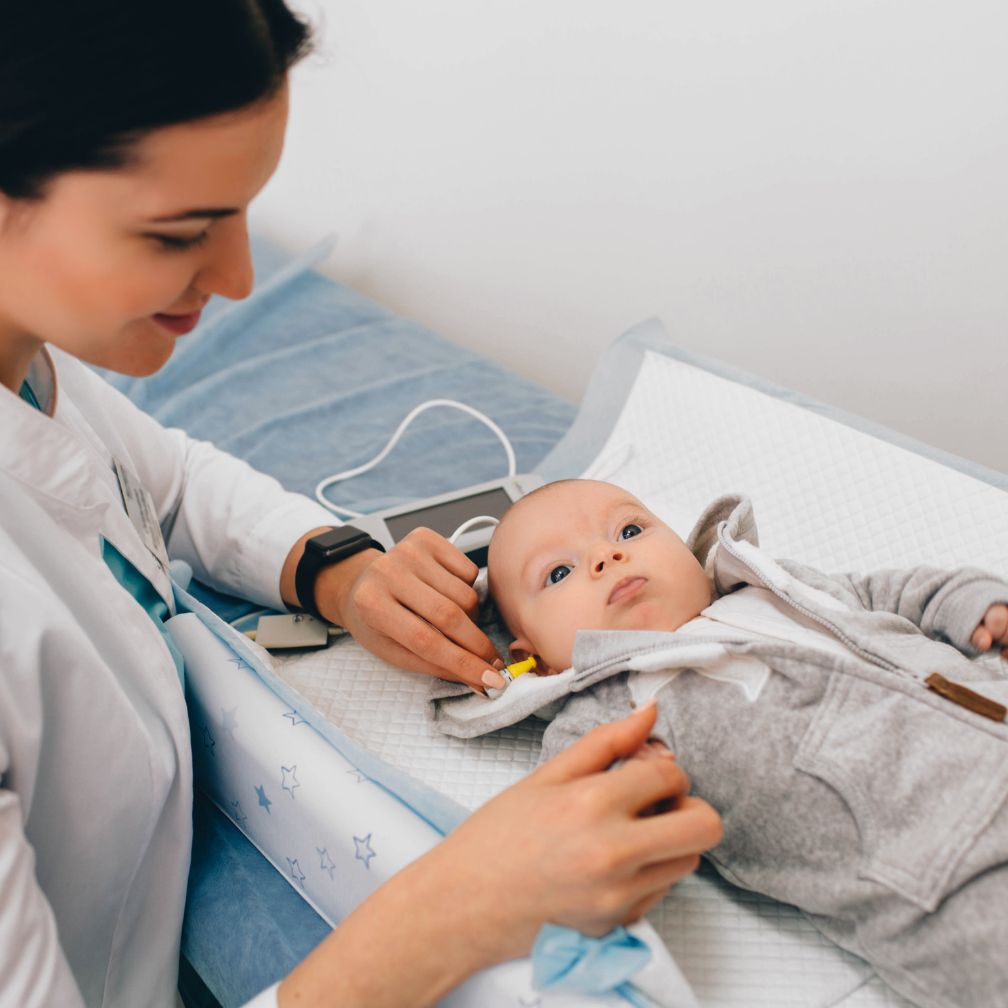
For parents holding a newborn, hearing a medical report of infant hearing loss naturally causes profound stress and concern. However, the optimistic truth remains that via rapid evaluation and proper care, babies experiencing hearing issues are able to thrive. Beyond question, such babies can gain early speech, interactive expression, and deep bonds across their environment, fostering an enriched future!
Deploying personal hearing aids alongside cochlear implantation options offers two exceptionally successful approaches for guiding infants with hearing loss. In the following segment, we detail their individual operations and outline how to find the perfect fit for your infant.
Analyzing Infant Auditory Deficits
Hearing impairment in young infants routinely stems from a wide array of factors, including:
- Spontaneous genetic variations (even among ancestral lineages lacking hearing loss history)
- Dangerous maternal congenital infections like cytomegalovirus (CMV) or rubella infection
- Delivery difficulties, like acute oxygen deprivation or preterm birth
- Certain intensive care medications administered in specialized newborn facilities
What constitutes the single most vital measure? Prompt diagnostic confirmation. As an outcome, babies in United States hospitals complete hearing screening protocols before returning home. Pediatric audiology specialists adhere strictly to the standardized “1-3-6” operational timeline:
- Baseline hearing check administered by 1 month of life
- Diagnosed by 90 days of life
- Clinical intervention (utilizing corrective devices or speech habilitation) established prior to 6 months of age
Reaching these structural checkpoints secures for infants an optimal path toward speech acquisition, language mastery, and cognitive growth. If you desire assistance regarding these auditory screens, your primary pediatrician stands ready to assist you!
Hearing Aids for Infants
Regarding babies affected by mild to severe hearing loss, prescription hearing aids generally function as the foundational first step. These miniature, wearable instruments elevate acoustic volume, helping babies hear speech and environmental sounds more clearly.
Tailored infant hearing instruments serve as:
- Exceptionally safe for use on newborns merely a few weeks old
- Crafted featuring soft, gentle, flexible ear molds that adjust alongside the infant’s growth
- Assembled with child-proof battery covers plus specialized safety features geared toward babies
- Precisely calibrated by a trained pediatric audiologist to align with your baby’s unique hearing profile
As your baby grows, hearing devices require routine recalibration to maintain ideal ear-canal fit and acoustic output.
Pediatric Cochlear Implants: An Advanced Solution
In cases where a baby suffers from severe to profound sensorineural impairment that fails to respond adequately to conventional hearing aids, a cochlear implant may be recommended. In contrast to conventional amplification tools, advanced cochlear implants:
- Are surgically implanted within the inner ear
- Safely bypass non-functional structural regions in the cochlea
- Process incoming audio into direct electrical pulses that trigger the acoustic nerve directly
Pediatric cochlear implant systems remain:
- Clinically approved by the FDA for application in babies aged 9 to 12 months and older
- Uniquely successful when paired with early therapy and family support
- Recommended exclusively following detailed multi-disciplinary testing by a certified audiologist and otolaryngologist
That pre-surgical path incorporates radiological imaging, advanced hearing evaluations, and in-depth discussions surrounding achievable long-term goals.
Comparing Hearing Aids and Cochlear Implants: Key Differences
- Mild to severe levels of impairment utilize Hearing Aids; Severe to profound levels of loss demand Cochlear Implants
- Non-Invasive external fitting: Hearing Aids; Invasive surgical procedure: Cochlear Implants
- Acoustic volume boosting: Hearing Aids; Digital electrical impulse transformation: Cochlear Implants
- Application starts during early infancy: Hearing Aids; Starts at 9-12 Months: Cochlear Implants
Concluding Guidance on Pediatric Hearing Technology
Should your baby receive a formal hearing loss diagnosis, you can rely on excellent technological options and dedicated care teams are available. With the help of pediatric hearing specialists, countless infants successfully cultivate language skills that are on par with their peers.
Whether your child is a candidate for hearing aids or cochlear implants, early management can make a lifelong difference.
Are you looking for clarity regarding your infant’s hearing development? Reach out to us today to receive a complete diagnostic assessment and personalized rehabilitation plan.