
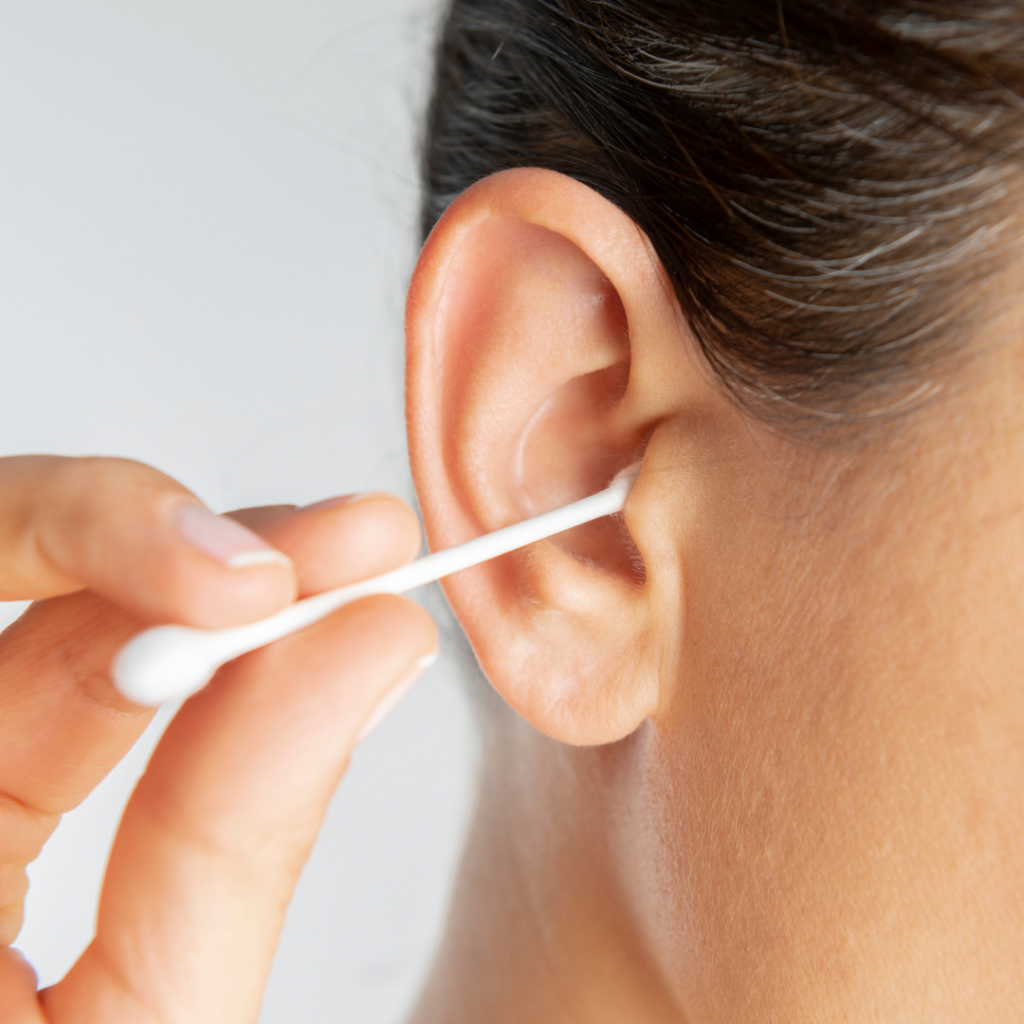
Cotton swabs may seem like convenient ear-cleaning tools, but inserting one into the ear canal can make cleaning harder over time and may damage your ears. Our audiology team evaluates whether cerumen accumulation requires clinical extraction and suggests techniques tailored to your auditory health. Healthy ears rarely require aggressive manual intervention; nevertheless, when blockage develops, we assist patients in safely extracting excess cerumen.
Why Are Q-Tips Bad for Your Ears?
Biologically, earwax—known clinically as cerumen—is not an unhygienic waste product. It traps dust and debris, helps limit bacterial growth, lubricates the ear canal, and protects its sensitive skin. Standard jaw mechanics and lateral skin shedding propel oxidized wax toward the outer meatus, allowing it to dry and wash away during daily washing.
Pushing a cotton applicator past the canal opening disrupts this natural physiological transport. While the fibrous tip might extract superficial wax particles, it predominantly forces deeper accumulations toward the tympanic membrane. Continuous swab usage packs loose secretions into a hardened mass, generating an occluded sensation that tempts patients into additional probing.
You may gently utilize cotton swabs across the external auricle, but you should avoid inserting them into the internal canal.
Types of Ear Injuries Caused by Cotton Swabs
The skin lining the ear canal is thin and easily scratched. Small abrasions can cause pain or bleeding and create an opening for bacteria, increasing the risk of an outer-ear infection. In addition, the cotton head can loosen and become retained as an obstructing foreign object in the ear.
Possible injuries include:
- Cerumen driven into deep obstructive impactions
- Scratches, irritation, swelling, or bleeding
- Acute otitis externa or canal infection
- A cotton tip or other material trapped in the ear
- A torn or perforated eardrum
- Mechanical trauma to the middle-ear ossicles behind the eardrum
- Sudden alterations in auditory acuity or permanent hearing changes
- Onset of tinnitus, positional dizziness, or acute ear pain
Serious injuries are uncommon, but they can happen if someone bumps the user’s arm, the swab slips, or it is inserted too far.
Determining the Proper Frequency for Earwax Removal
Most people do not need to remove earwax on a schedule. Normal ears migrate cerumen toward the opening constantly, allowing routine bathing to cleanse the visible exterior. Overcleaning can dry or irritate the canal and may increase the likelihood of infection or impaction.
Removal becomes appropriate when wax blocks the canal, prevents us from examining the eardrum, interferes with a hearing aid, or causes discomfort.
Safe Home Strategies for Managing Earwax
When cerumen creates no clinical symptoms, leaving the canal alone remains the most prudent approach. Use a damp, soft cloth to clean only the exterior ear structures, allowing the inner canal to maintain itself.
When dense wax needs to be softened, we may suggest specialized OTC drops or solutions containing carbamide peroxide, saline, glycerin, or mineral oil. Dispense only the directed amount and restrict use strictly to the timeframe specified on the product packaging. Stop if the drops cause pain, marked dizziness, rash, or worsening symptoms.
Performing home ear irrigation carries distinct risks and requires prior professional evaluation and hands-on technique instructions. You must never employ high-pressure dental water jets for ear clearing. Avoid hazardous gadgets including ear candles, sharp metal loops, camera-assisted tools, hair clips, and home vacuum extractors. Such unregulated implements can cause thermal burns, canal lacerations, eardrum perforations, or deeper cerumen impactions.
When Is Professional Earwax Extraction Necessary?
You should book a clinical appointment if your ear feels blocked following softening drops, cerumen is deeply wedged, or home methods fail to work. Professional removal is also preferable when a person cannot safely hold still, has a narrow ear canal, uses hearing aids, or has medical or surgical factors that make drops or irrigation risky.
Seek an examination for:
- Severe ear pain, intractable itching, or outer ear tenderness
- Visible blood, purulent discharge, clear fluid drainage, or offensive ear odors
- Systemic fever spikes or acute swelling near the external ear
- New tinnitus or dizziness
- Rapid-onset hearing impairment or ongoing hearing deficits post-cleaning
- A suspected perforated eardrum or retained cotton tip
- Chronic cerumen impactions that clog or disrupt hearing aids
Treat sudden hearing loss in one ear as a medical emergency rather than assuming it’s wax. Timely clinical evaluation distinguishes benign wax blockages from urgent inner ear pathologies requiring rapid steroid therapy.
How Healthcare Providers Extract Impacted Earwax
First, we inspect the auditory canal under otoscopic or microscopic visualization to confirm wax occlusion and rule out infections, tissue trauma, or eardrum perforations. The ideal extraction strategy is dictated by the consistency of the wax, ear canal dimensions, clinical background, past ear procedures, and patient physical stability.
Standard clinical removal options include:
- Medical-grade wax softeners administered prior to or during the procedure
- Controlled irrigation with body-temperature fluid when the eardrum is intact
- Precision micro-suction under continuous microscopic visualization
- Mechanical extraction using sterile ear loops, specialized curettes, or micro-forceps
Direct visualization allows the clinician to work around sensitive canal skin and stop if discomfort occurs. Patients presenting with dry or tightly impacted wax may require a combination of these clinical approaches. After removal, the ear can be reexamined to confirm that the canal and eardrum are healthy. If aural fullness, ear ringing, dizziness, or auditory impairment remains after cleaning, further diagnostic evaluations can identify the root issue.
Schedule Professional Earwax Removal
Should you experience aural fullness or sudden hearing shifts, arrange a clinical evaluation with our office instead of relying on cotton swabs. The diagnostic session entails reviewing your symptom timeline, past otologic procedures, hearing aid usage, past home treatments, and risk factors for recurring cerumen. Connect with our practice today to reserve an appointment for safe, professional earwax removal.